
Industrial Burners Are No Longer Just Flames - They're Intelligent Energy Systems
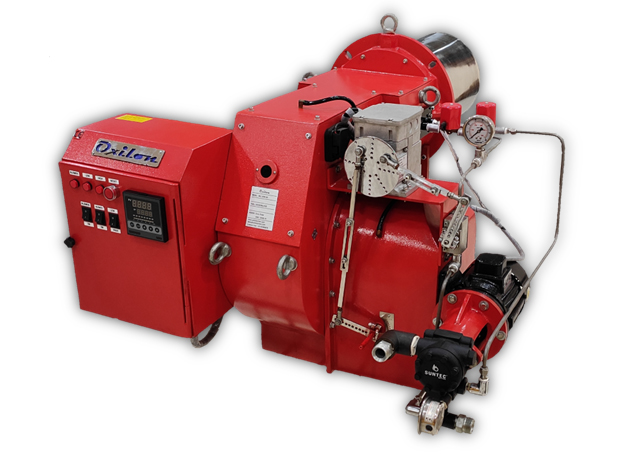
Beyond Heat: How Industrial Burners Like Oxilon Are Quietly Redefining Manufacturing Efficiency
For most people, an industrial burner is invisible. It sits inside a boiler, furnace, or dryer and does its job silently—turn fuel into heat.
But in modern manufacturing, that “simple job” has become one of the most critical performance factors in an entire plant.
Because today, it’s no longer just about producing heat.
It’s about how intelligently heat is created, controlled, and optimized.
The Hidden Pressure Behind Every Flame
Industries today operate under three constant pressures:
- Rising fuel costs
- Strict emission regulations
- Demand for uninterrupted production
In this environment, even a small inefficiency in combustion is not small at all. It becomes:
- Higher operating cost
- More carbon output
- Lower production stability
This is where advanced burner systems—like those developed under Oxilon Burners solutions—become part of a much larger shift: from raw heating to engineered combustion intelligence.
From “Burning Fuel” to “Managing Energy”
Traditional burners were designed with one goal: produce flame.
Modern industrial burners are designed with a different philosophy:
“Produce only as much heat as needed, in exactly the way it is needed.”
This shift means burners are now expected to:
- Adjust flame behaviour based on load changes
- Maintain stable combustion under variable conditions
- Improve fuel-air mixing for maximum efficiency
- Reduce excess heat loss instead of just generating heat
In simple terms, burners are no longer just heat sources—they are energy managers inside industrial systems.
Where Oxilon Burner Systems Fit In
Modern burner systems like those associated with Oxilon Burners focus on precision-driven combustion.
Instead of treating every operation as identical, they are built around industrial variability:
- Different fuels
- Different load conditions
- Different temperature requirements
- Different industry environments
The real engineering focus is not just flame creation, but flame control under uncertainty.
That is what separates basic burners from performance-focused systems.
The Real Metric Is No Longer Heat — It’s Efficiency Stability
Earlier, industries measured burners in terms of output:
- How much heat?
- How fast?
Now the more important questions are:
- How consistently does it perform over time?
- How efficiently does it use fuel under changing load?
- How stable is combustion during long operations?
This is subtle but powerful. It reflects a deeper industrial transformation: efficiency is no longer a feature, it is a basic requirement.
Why Industrial Burners Are Becoming “Invisible Intelligence Systems”
One of the most interesting changes in industrial engineering is this:
The better a burner becomes, the less you notice it.
A well-optimized burner system:
- Doesn’t demand frequent adjustments and Maintenance
- Doesn’t create fluctuations in output
- Doesn’t waste energy visibly
- Doesn’t interrupt production flow
It simply integrates into the system and disappears into performance.
That is where modern burner design is heading—towards automation, stability, and self-optimization.
The Future of Industrial Burners Is Not Bigger Flames — It’s Smarter Ones
The next stage of burner evolution is not about increasing power.
It is about:
- Smarter combustion control
- Lower environmental footprint
- Adaptive fuel usage
- Integration with automated industrial systems like PLCs, SCADA
In this landscape, companies associated with industrial burner development—like Oxilon Burners—are part of a broader shift toward precision-driven thermal engineering.
Final Thought
Industrial burners are no longer just equipment hidden inside machines.
They are becoming:
- Efficiency controllers
- Energy optimizers
- Sustainability tools
- And silent performance drivers of entire industries
And the real competitive advantage in manufacturing is shifting toward those who understand one simple truth:
The future of heat is not more heat. It is smarter heat.


